


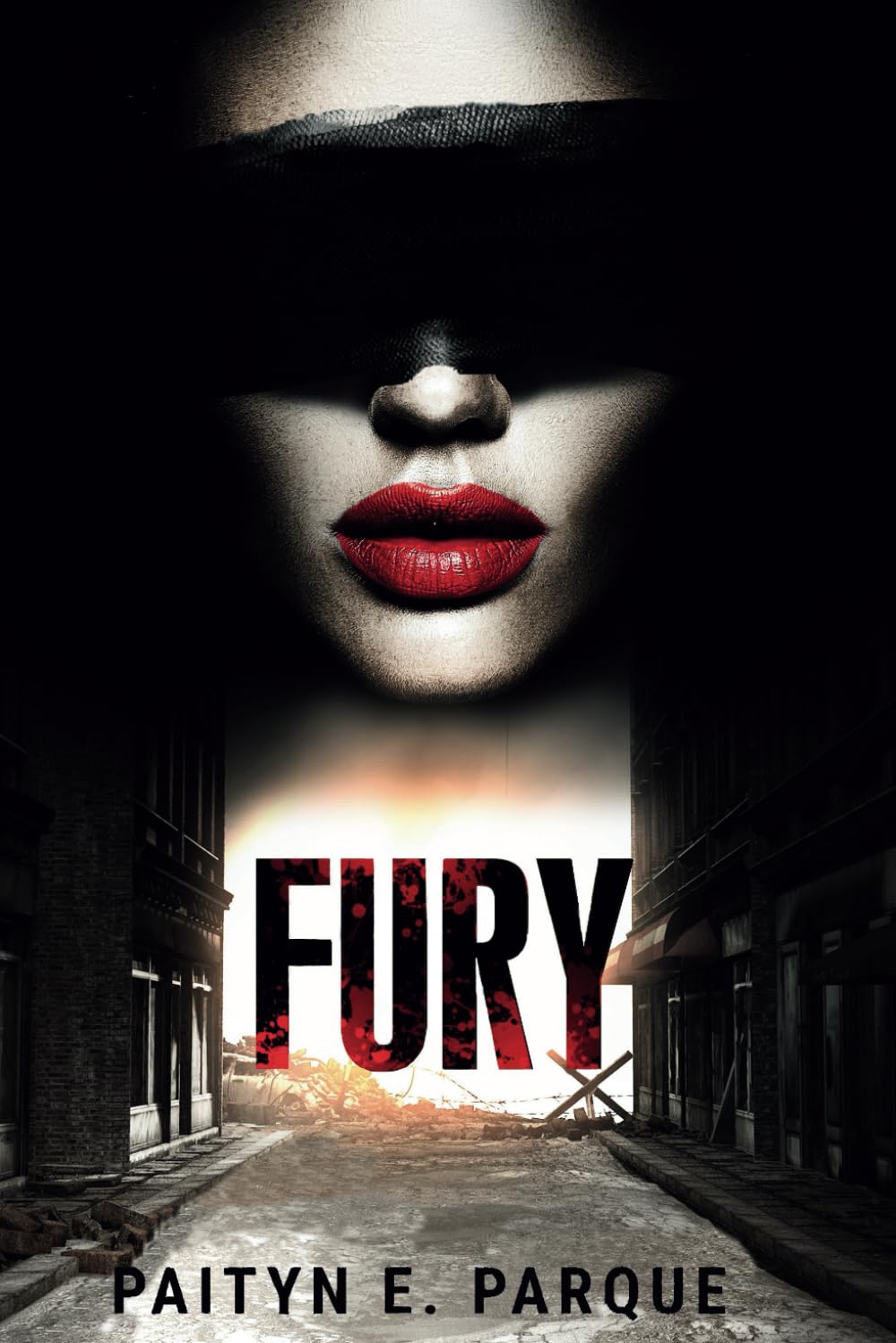
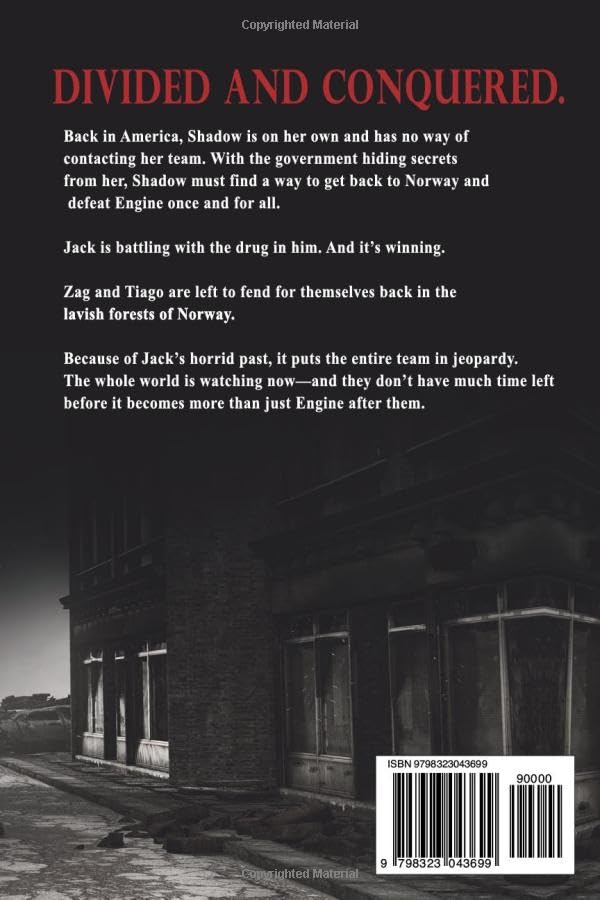
Written by Paityn E. Parque
Author Paityn E. Parque is eighteen years old. If the fact that she has published a book at this age isn’t phenomenal enough, Fury is her third book, closing out the Engine’s Game trilogy, following Madness (read my review here) which she released at fifteen, and Havoc (you can read that review here) at sixteen. If you haven’t read my reviews, take a moment to go through them. Despite her young age, Parque’s books are as accomplished as many authors well into adulthood… more accomplished than a large number of them, even. These books are young adult stories written by someone in the target demographic; tales written by someone who is of a similar age to her characters.
Whether it’s because of her proximity to the characters’ ages, an innate gift at writing characters, or—as I suspect—a combination of both factors, the characters in Fury all ring entirely true. Shadow, the protagonist, serves as the point of view character through the novel’s events, is an engaging character who, despite the events surrounding her and everything she has endured through the books’ events, is a relatable hero who readers will undoubtedly enjoy following. She is clearly drawn throughout, bearing the weight of everything she has survived (and failed to survive, thanks to the concept behind the trilogy). The book’s other characters don’t have quite the same amount of depth to them, but still feel like real people.
In my reviews of Madness and Havoc, I mentioned that I didn’t find myself caring about these characters as much as I would have liked, due to the way characters rushed to decisions and the way the book hurried through certain elements. Whether it’s because of the extra time between books or that the author has developed in her writing, I have no such issues with Fury. The characters, their way of acting, and the amount of detail provided all click in a way that they didn’t in those first two books. I found myself caring about all the characters—even those less likeable than the others—as these elements clicked into place.
The impact on the trilogy’s characters is just one way that Fury has improved upon its (already thoroughly enjoyable) predecessors. The book improves on the earlier stories’ weaker moments, and it takes all the elements that worked so well in those books, doubles down on them, and makes them even better this time around. I don’t want to sell the previous two books short, but Fury isn’t just the strongest book in the Engine’s Game trilogy, it feels like an evolution from them. The result is a book that serves as a wonderful end to the trilogy, and with such an evolution, I’m truly excited to see what the author offers the world next.
Clocking in at 422 pages in paperback and hardcover (or an estimated 351 pages in eBook), Fury is the longest book in the trilogy by a fair margin. It’s a relatively long book for the young adult genre. Younger fans might find the length unwieldy, but older YA readers should be comfortable with the length. This is helped by the style of the writing, which is written in a way that is easy to follow. The prose is clear and concise, guiding the reader through the story. It doesn’t stand apart from the story being told, thereby overshadowing the story; it works in service of it. The dialogue works with the prose, while feeling entirely natural. The cast is filled with teenage characters, and they all sound like it. Their age hasn’t been artificially increased, nor have they been written down, and they don’t sound overtly precocious. Both the prose and dialogue work well together.
Not only does the book’s length make it more appropriate for older fans of young adult books, so do its themes. Like Madness and Havoc before it, Fury is filled with dark subject matter. In the previous books, much of this was focused on the violence, of which there was plenty. With all that violence the characters endured, Fury puts a heavier focus on the characters’ mental health, with a focus on trauma and how they contend with it. The book also looks at the darkness within its characters and past mistakes borne from it. The content in the book (and the trilogy at large) will likely trigger some readers, but none of it ever feels gratuitous.
These themes also tie into Fury’s plot, which revolves around the characters taking the fight to the villainous Engine, seeking justice for everything they had to endure. Set in the real world instead of the setting of the two previous books, the result is a story that feels different to its predecessors, while also feeling like a natural progression. At times, it feels a little more meditative than those books, but overall, the plot is tightly woven as it pushes through to the end. It’s a gripping story that serves as a wonderful capstone to the trilogy.
Picking up almost immediately after Havoc, Fury is firmly the final book in a trilogy. Whilst it dedicates a small amount of space to getting readers across what came before, to fully enjoy the book, readers will need to read not just Havoc, but Madness before it. It’s easy to pick up the cliffnotes, but without having read the first two books, much of the relevant information will be missed. Those who have read the first two books will be rewarded for their time, however, as this final chapter brings everything together wonderfully.
Fury is not only a brilliant end to an excellent trilogy, it is the best book of the three. It’s unafraid to do something different in its change of setting, and it’s all the stronger for it. The characters resonate more strongly than they did in the first two novels, and the story comes together more cohesively than the others. The writing itself flows more naturally, both in the prose and dialogue. The result is a book that is an accomplishment for any writer, let alone one who is still a teenager. Paityn Parque is sure to have a wonderful writing career ahead of her.
Favourite Passage
“Yeah, your, uh, Jackie boy or whatever.” Diana smiled sweetly—as sweetly as a walking corpse could. She jumped off the dumpster and circled Shadow like a hungry shark.
Fury, Chapter 4
Fury was provided by the author for the purpose of an honest review.
Fury is available in paperback and hardcover and on Kindle, exclusive to Amazon.
Note: I do not post scores for reviews on this website, but do post them on my Amazon and Goodreads reviews:
- Amazon
- Goodreads
You can follow Paityn Parque online, via:

 wastanley.com